VITRAHAUS
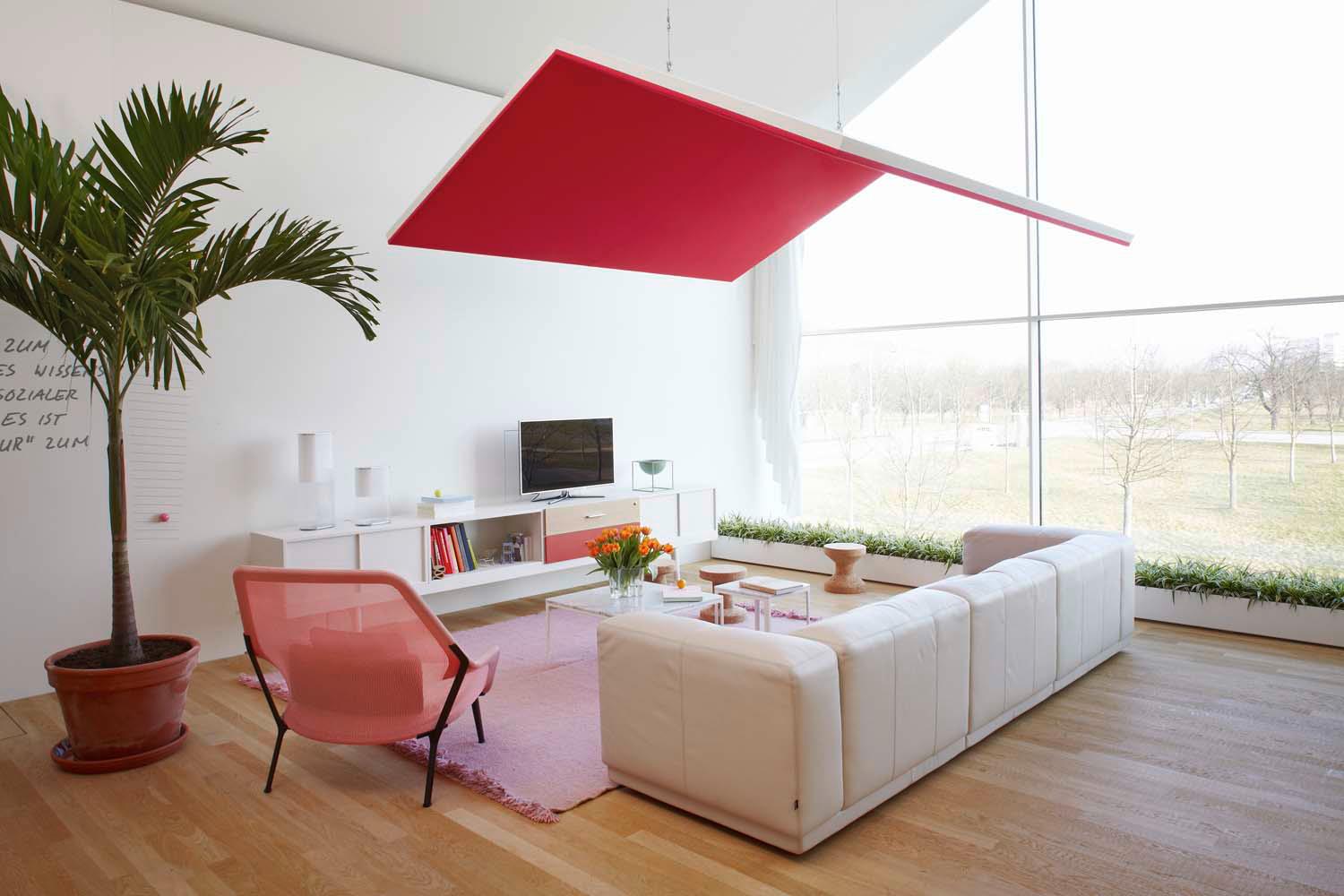
VitraHaus, designed by Herzog & de Meuron, is the flagship showroom for Vitra’s Home Collection. The project centred on developing an environmental graphic system that enhanced the visitor experience while sitting naturally within furniture installations and the building’s distinctive architectural language.
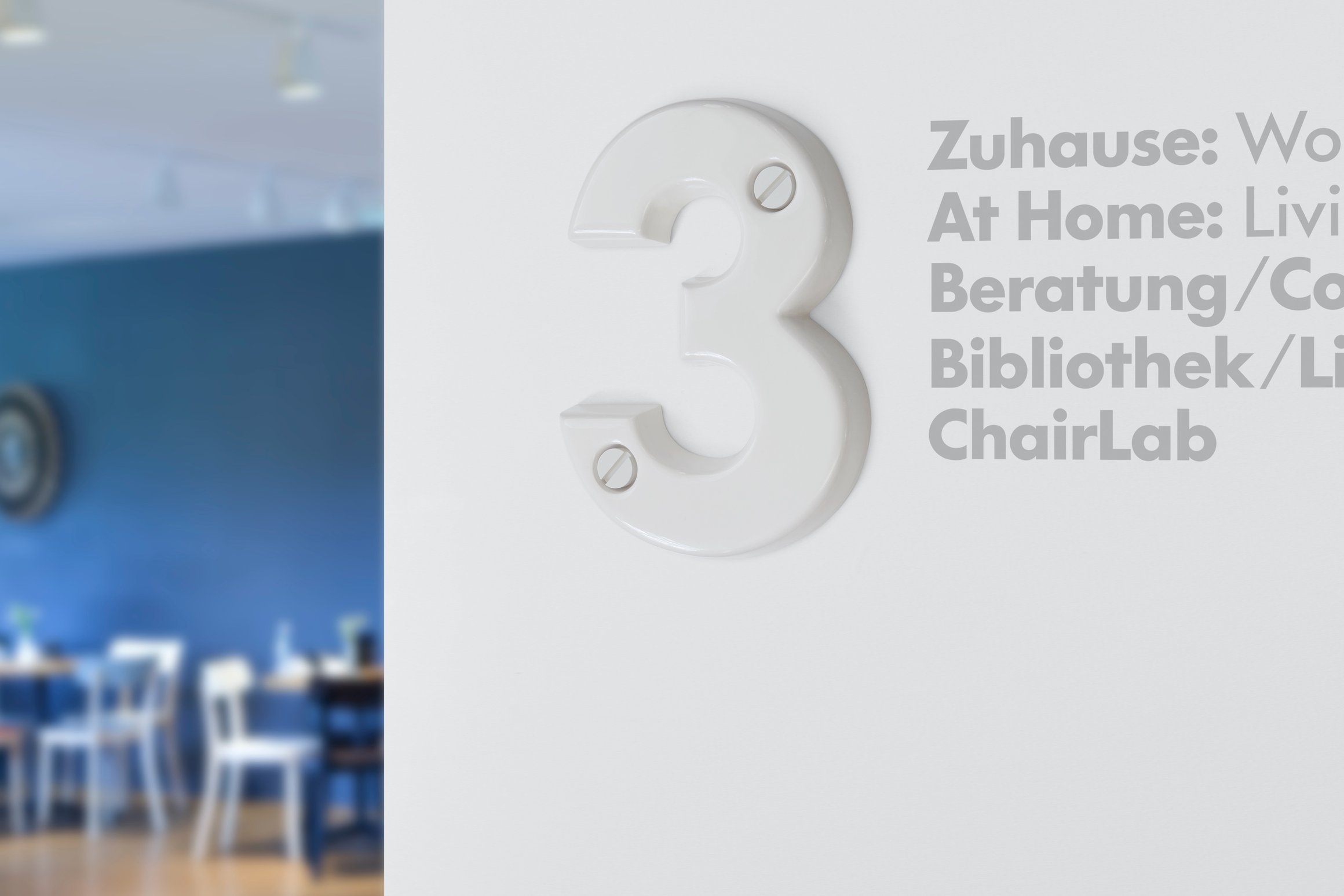
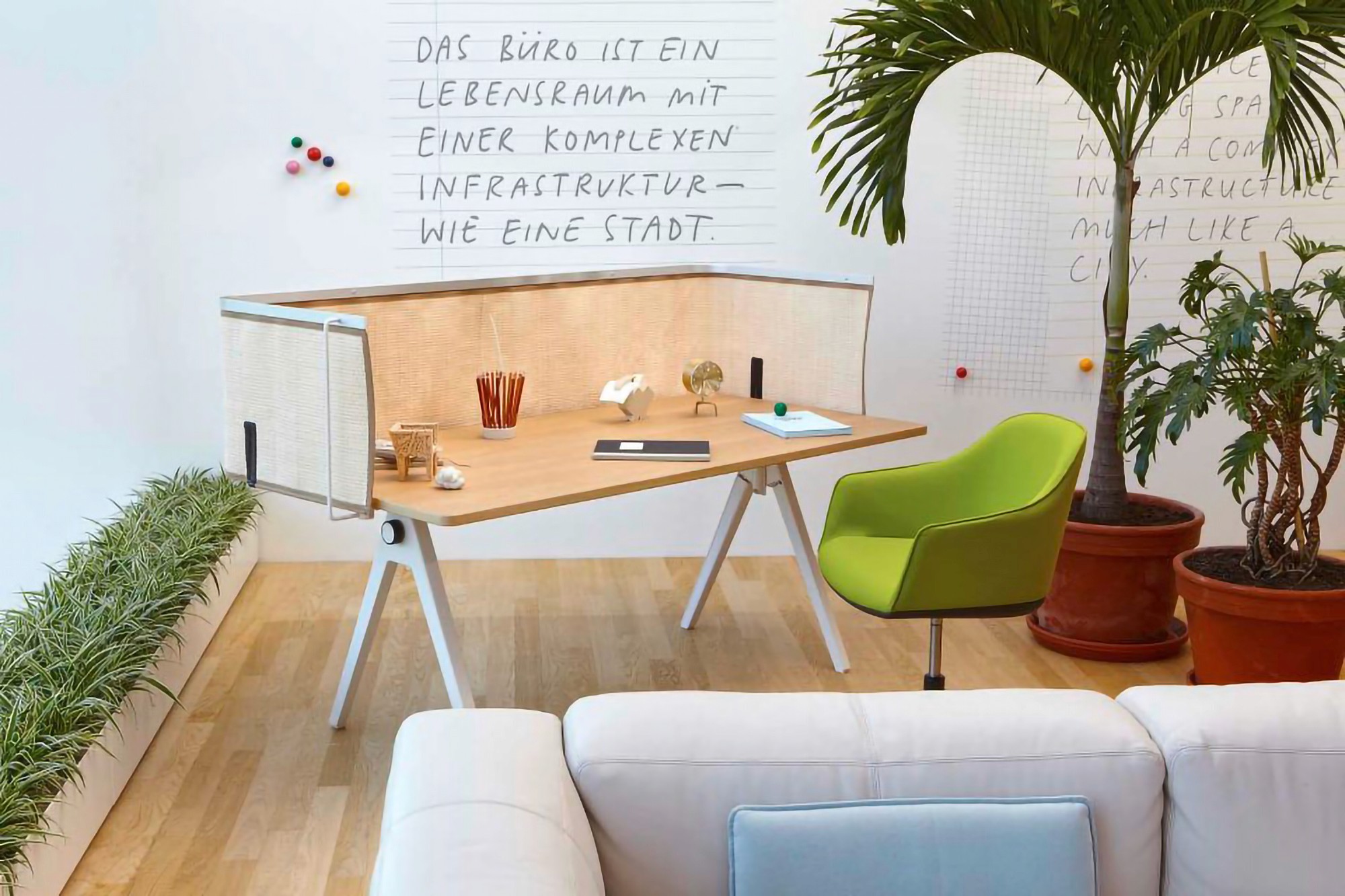
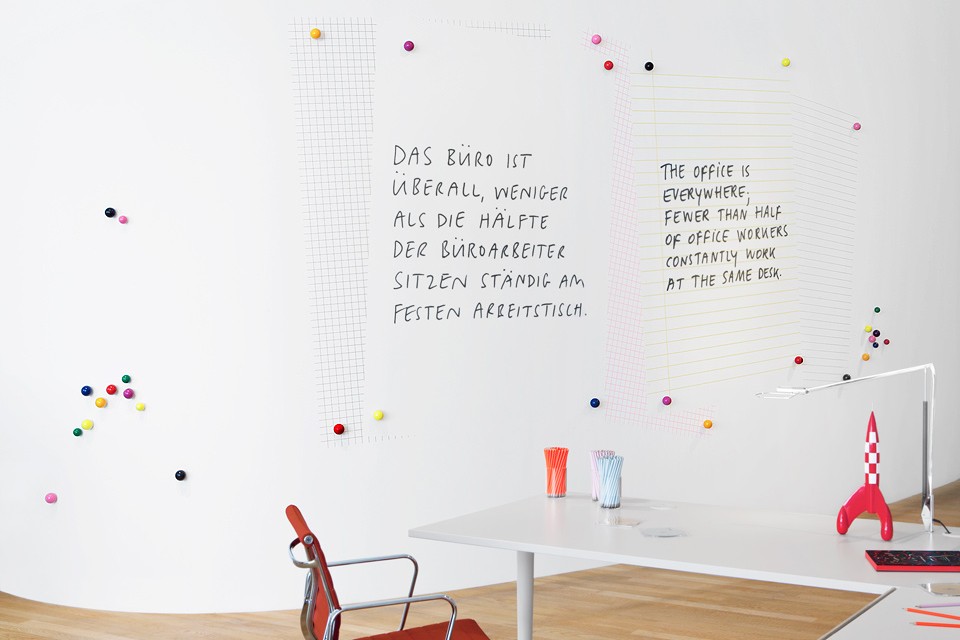
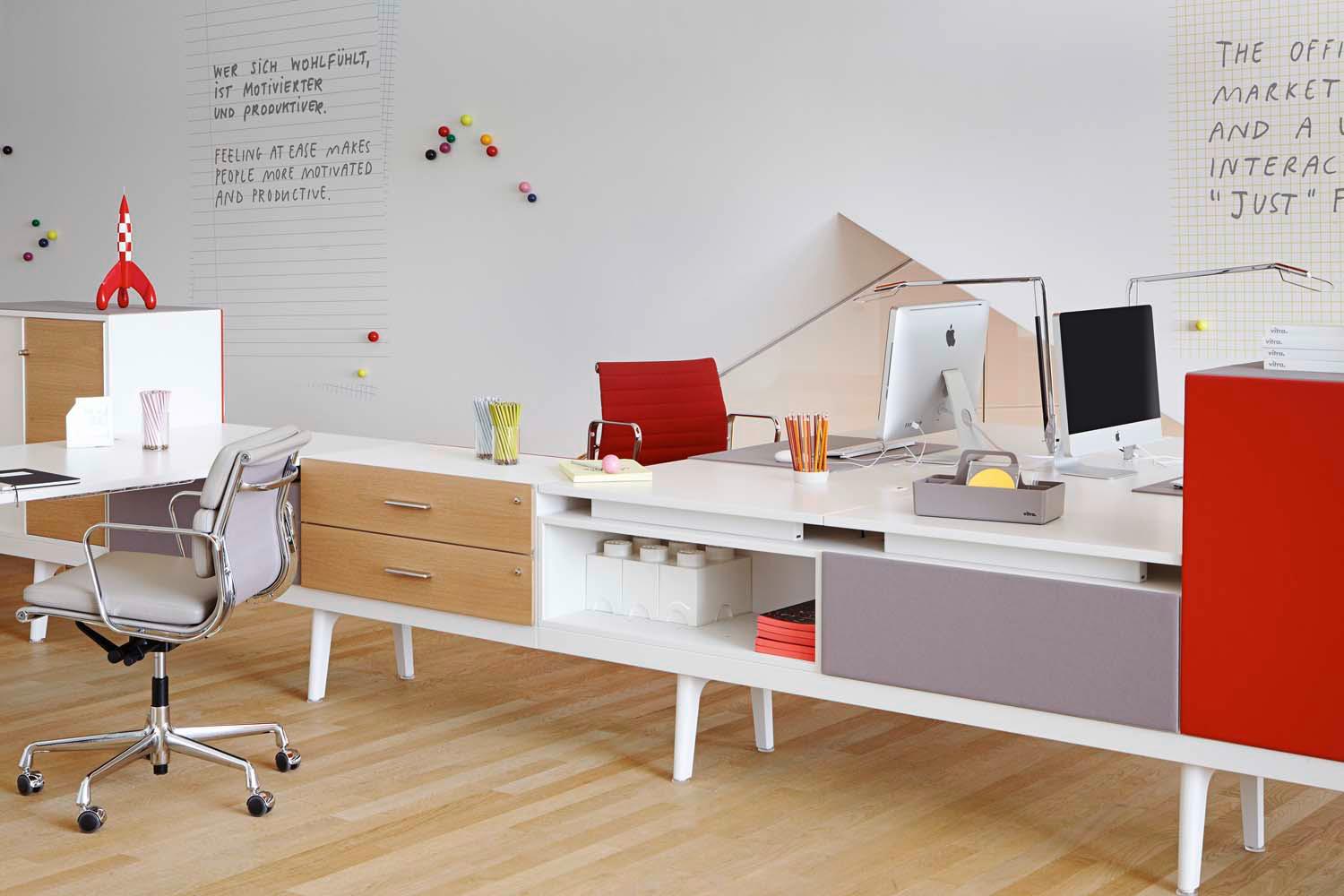
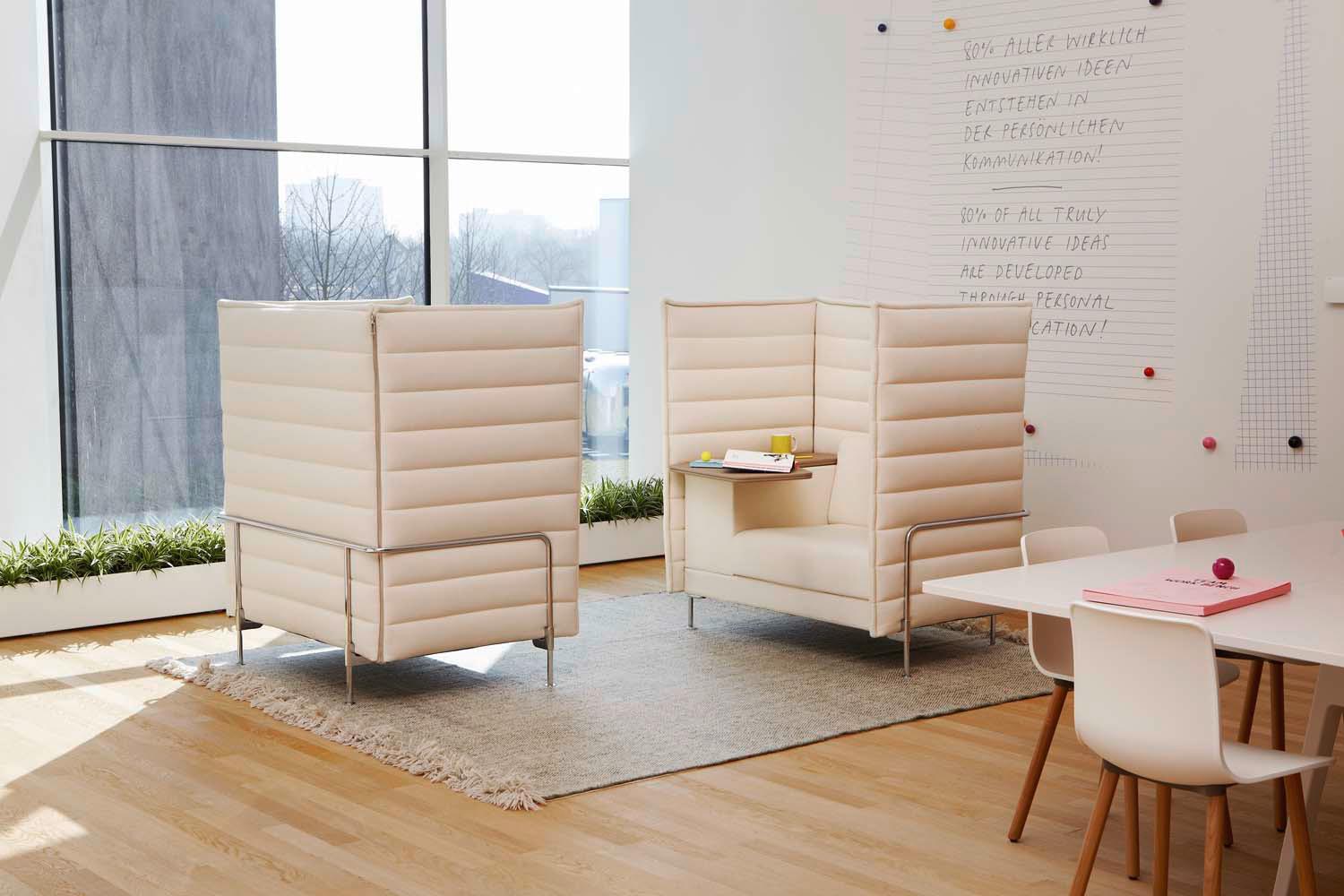
The strategy focused on playfulness with scale. Signage employed characterful wall graphics drawn from lined paper patterns, while handwritten insights introduced a human layer of authenticity, softening the space and reinforcing Vitra’s approachability.
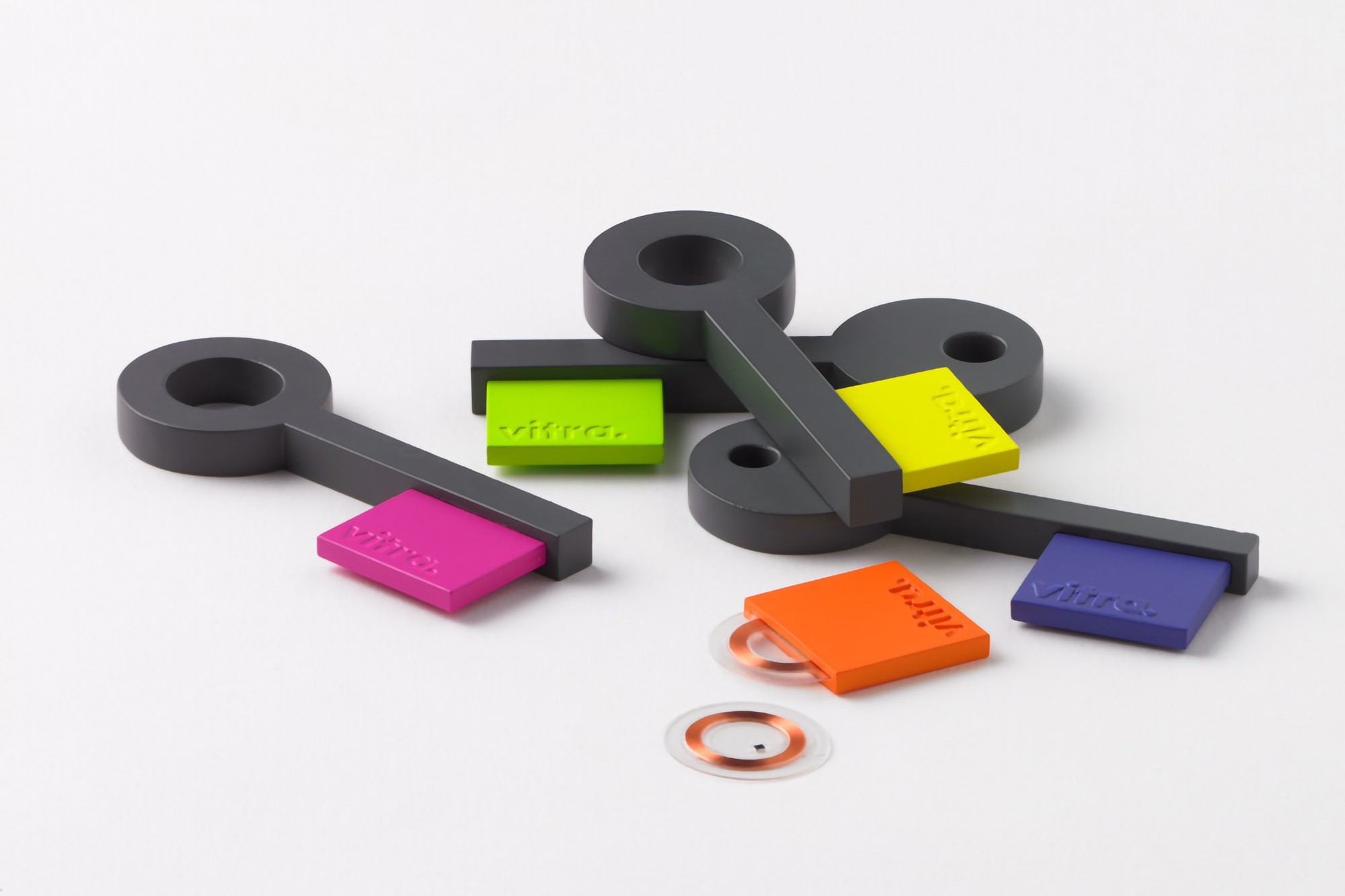
Developed in close collaboration with Vitra’s in-house architecture team, the environmental graphics were designed for public areas and embedded directly within furniture setups. Carefully considered elevations helped place each element in context, giving visitors a clearer sense of real-world use. Specialist printmakers in Germany delivered tactile components that balanced craft, clarity, and production precision. Key elements included tear-off design specifications, layered wayfinding, and the RFID-enabled HausKey, allowing visitors to collect product information by interacting with furniture touchpoints throughout the space. Each component was designed to be both functional and expressive, extending Vitra’s playful, human-centred design language seamlessly across the environment.
The system enhanced the experience for more than 300,000 annual visitors, making navigation intuitive while reinforcing Vitra’s philosophy of layered, exploratory design. The environmental graphics transformed VitraHaus into a living narrative of the brand, where design, architecture, and storytelling coexist with ease.